

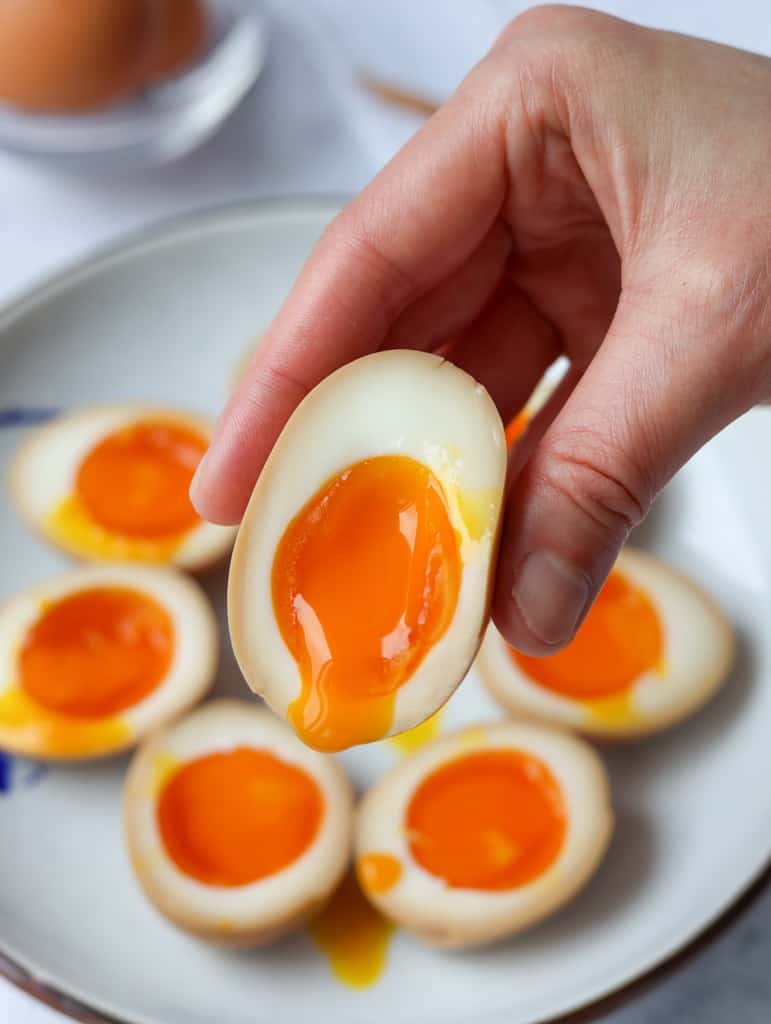
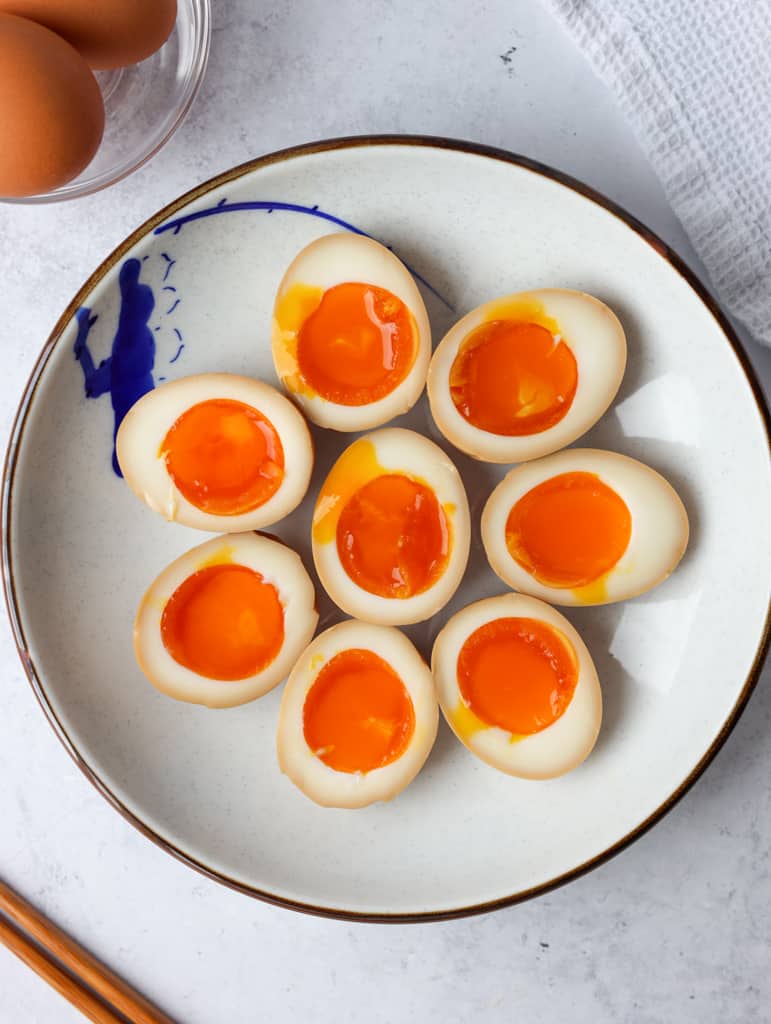
When you want to elevate homemade ramen or rice bowls, these soft-boiled eggs deliver a rich, jammy texture and deep umami flavor. They come together using just seven simple pantry ingredients. This versatile protein is perfect for weekly meal prep and easily adapts to gluten-free diets.
Jump to:
My first taste of these Japanese soy-marinated eggs was at Ajisen Ramen while slurping on a steaming bowl of noodles. Their signature jammy texture and savory depth instantly hooked me. Through years of kitchen testing, I discovered that an overnight soak is the sweet spot for flavor absorption. Letting them rest in the fridge for 12 to 24 hours ensures the marinade penetrates deep into the egg.
Why My Recipe Works
- Ice bath prevents overcooking: Shocking the eggs instantly stops residual heat to guarantee a perfectly jammy center.
- Time eggs with a digital timer: Track cooking down to the second to guarantee identical, consistent yolks every time.
- Controlled boil prevents shell cracking: Keeping the water at a steady simmer or medium-high boil reduces agitation, helping eggs cook evenly without breaking.
Ingredients & Substitutions
Exact ingredient measurements are listed in the recipe card at the bottom of this page.
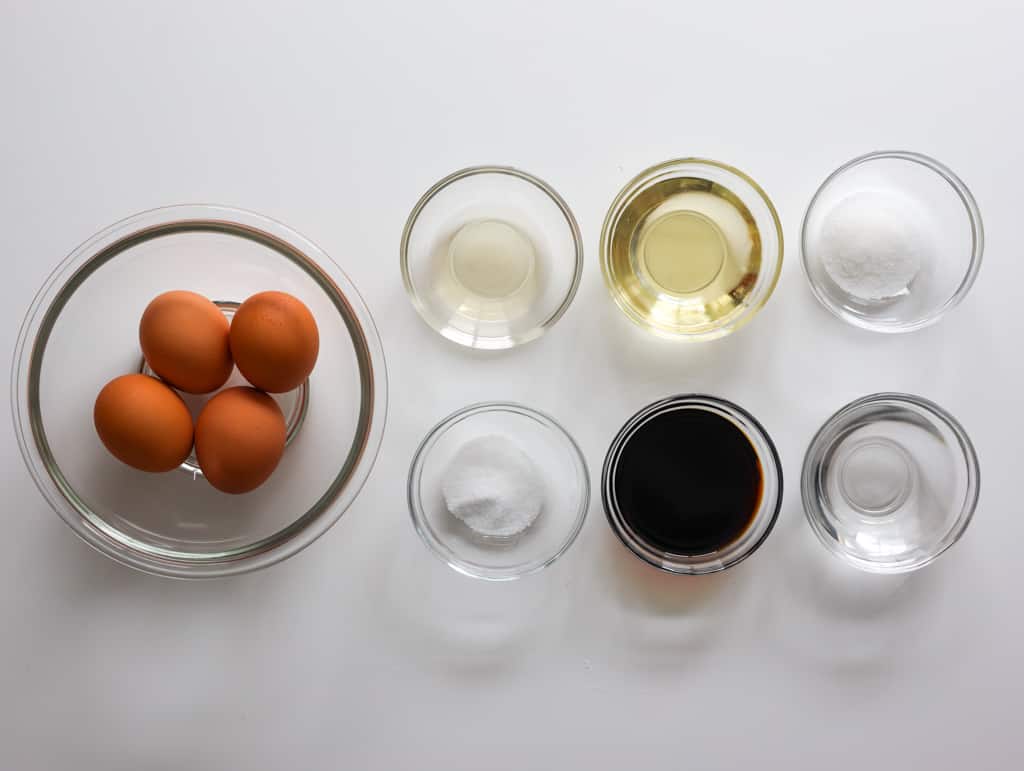
- Large Eggs: The base of the dish and each egg should weigh 57 grams to achieve a perfectly jammy center. Use pasture-raised eggs or Omega-3 eggs for the richest yolk color. Sub: Medium eggs and reduce the boil time by 30 seconds.
- Salt: Helps egg whites set quickly if a shell cracks during boiling, reducing leakage into the water. Use table salt, fine sea salt, or substitute with kosher salt by doubling the volume.
- White Vinegar: Helps egg whites coagulate faster if a shell cracks during boiling to minimize white leakage. Use standard distilled white vinegar, or substitute with equal parts rice vinegar or apple cider vinegar.
Egg Marinade
- Regular Soy Sauce: Adds salt and umami to the egg brine. I prefer Kikkoman but other brands work too. Subs: Low-sodium or light soy sauce.
- Mirin: A sweet Japanese rice wine that balances the heavy salinity of the soy sauce base. I prefer Mizkan or Kikkoman but other brands work too. Non-Alcoholic Sub: ¼ cup of water mixed with 4 teaspoons of granulated sugar.
- Cold Water: Acts as a neutral base to dilute the salty soy sauce.
- White Granulated Sugar: Balances the salinity of the soy sauce. Sub: Granulated cane sugar.
Note: Asian ingredients are typically available at most Asian grocery stores, or you can check online retailers such as Amazon.
Instructions
Below are step-by-step instructions on how to make ramen eggs:
- Mix the marinade: Combine the listed marinade ingredients in a small airtight container or mason jar until the sugar dissolves completely. You can microwave the liquid for 30 seconds to speed up this process.
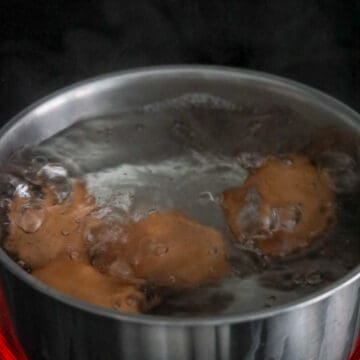
- Boil the eggs: Fill a small pot with enough water to fully submerge the eggs, then add the salt and vinegar. Bring to a boil over high heat, then reduce to medium-high heat for a steady simmer. Gently lower the eggs into the water (use either room-temperature or fridge-cold eggs). Set a timer and boil for 6 minutes for runny yolks, 6 ½ minutes for jammy runny yolks, 8 minutes for jammy set yolks, or 10 minutes for fully hard-boiled yolks. If using fridge-cold eggs, briefly rinse under warm water for about 15 seconds to take the chill off before lowering them into the water, then add 1 extra minute to the cooking time for consistent doneness.

- Shock in ice bath: Prepare an ice water bath in a separate bowl while the eggs boil. Transfer the cooked eggs directly into the ice bath to instantly halt the cooking process. Leave them submerged until they are completely cold to the touch.
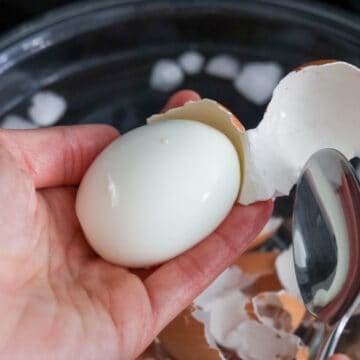
- Peel the shells: Gently tap the cooled eggs with the back of a spoon to crack the shells. Slide a spoon under the shell starting at the wider base of the egg where the natural air pocket sits to peel cleanly.
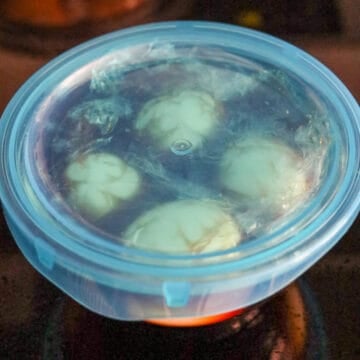
- Marinate the eggs: Submerge the peeled eggs into the soy marinade. Place a small piece of paper towel or plastic wrap directly on top of the floating eggs to keep them fully submerged. Cover with a lid and refrigerate for at least 6 hours or overnight, or up to 24 hours for maximum flavor depth.

- Slice and serve: Remove the eggs from the marinade and place them on a cutting board. Cut them in half lengthwise using a sharp knife and serve cold over hot ramen noodles or rice bowls.
Expert Tips
- Use slightly older eggs (7-10 days): Fresher eggs are harder to peel due to tighter membranes. A short rest in the fridge improves peel-ability significantly.
- Shock eggs in ice water: This shrinks the egg whites from the membrane for clean peeling.
- Cover with paper towel or plastic wrap: This keeps floating tops submerged for an even color.
- Remove eggs within 24 hours: To stop the curing process to avoid rubbery whites.
- Slice eggs with a sharp knife: This prevents tearing and smudging the sticky yolk.
Variations
- Gluten-Free Adaptation: Substitute the standard soy sauce with equal parts tamari or coconut aminos.
- Spicy Garlic Twist: Add one tablespoon of chili crisp and two crushed garlic cloves into the marinade container for an intense, fiery kick.
- Low-Sodium Swap: Use a low-sodium soy sauce and reduce the marinating window to 12 hours to lower the overall salt content.
Pairing Suggestions
- Steamed Jasmine Rice: Provides a neutral, starchy base that absorbs the umami-rich soy marinade perfectly.
- Seared Chashu Pork: Adds a rich, fatty protein element that complements the delicate, custardy texture of the jammy yolk.
- Garlic Sautéed Bok Choy: Introduces a crisp, bitter crunch to balance the saltiness and sweetness of the eggs.
Storage
- Refrigerator Storage: Keep the eggs in an airtight container with their marinade for up to 3 days. Consume by the fourth day to avoid safety issues and overly salty whites.
- No Reheating Required: Serve these eggs straight from the fridge. Adding them cold to hot ramen broth or warm rice will naturally heat them through without overcooking the jammy yolk.
- Freezing Restrictions: Do not freeze marinated eggs. Freezing completely destroys the delicate structure, turning the tender egg whites rubbery and watery.
FAQ
Yes. You can reuse the marinade for one additional batch within four days. Discard the liquid immediately if any broken egg yolks or debris contaminated the mixture from the previous batch.
Do not air fry the eggs instead of boiling them. Air frying fuses the inner membrane directly to the eggshell, making peeling difficult and tearing the whites. The dry heat also creates a tough, chewy exterior that blocks the marinade from absorbing evenly.
Fresh eggs tend to stick more tightly to the inner shell membrane, making them harder to peel. For easier peeling, use eggs that have been refrigerated for about a week, and immediately transfer cooked eggs to an ice bath to help separate the membrane from the whites.
More Like This
📖 Recipe

Easy Ramen Eggs Recipe (Jammy Ajitama)

Ingredients
- 4 large eggs (about 57 g each)
- 1 tablespoon white vinegar
- 1 teaspoon salt
Soy Sauce Marinade
- ¼ cup regular soy sauce or light soy sauce
- ¼ cup mirin
- ¼ cup cold water
- 2 teaspoon white granulated sugar
Instructions
- Combine the listed marinade ingredients in a small airtight container or a standard size mason jar until the sugar dissolves completely. You can microwave the liquid for 30 seconds to speed up this process.
- Fill a small pot with enough water to fully submerge the eggs, then add the salt and vinegar. Bring to a boil over high heat, then reduce to medium-high heat for a steady simmer.
- Gently lower the eggs into the water (use either room-temperature or fridge-cold eggs). Set a timer and boil for 6 minutes for runny yolks, 6 ½ minutes for jammy runny yolks, 8 minutes for jammy set yolks, or 10 minutes for fully hard-boiled yolks. If using fridge-cold eggs, briefly rinse under warm water for about 15 seconds to take the chill off before lowering them into the water, then add 1 extra minute to the cooking time for consistent doneness.
- Prepare an ice water bath in a separate bowl while the eggs boil. Transfer the cooked eggs directly into the ice bath to instantly halt the cooking process. Leave them submerged until they are completely cold to the touch.
- Gently tap the cooled eggs with the back of a spoon to crack the shells. Slide a spoon under the shell starting at the wider base of the egg where the natural air pocket sits to peel cleanly.
- Submerge the peeled eggs into the soy marinade. Place a small piece of paper towel or plastic wrap directly on top of the floating eggs to keep them fully submerged. Cover with a lid and refrigerate for at least 6 hours or overnight, or up to 24 hours for maximum flavor depth.
- Remove the eggs from the marinade and place them on a cutting board. Cut them in half lengthwise using a sharp knife and serve cold over hot ramen noodles or rice bowls.

CC
OMG! This has elevated my ramen soup recipe. I was previously using a recipe where you can crack an egg in the soup at the end of cooking and covering. That recipe was ok but wasn't quite right. This recipe Game changer! It's worth waiting 24 hours for the marinade to set. Note: You can reuse the marinade for a couple more uses.
Christie Lai
Aww wonderful to read this! Thank you so much for making my recipe and for sharing your game-changing experience here on the blog. Very glad it worked out well with your ramen 🙂
Ahmet
🙏🤌
Christie Lai
Thank you!
Darren
Yum
Christie Lai
Thanks Darren! Glad you enjoyed it 🙂
Stephanie
Made this to eat with our ramen dinner and wow! Is it delicious! Both my husband and I enjoyed it. I will be making more! I am wondering tho, how long is the marinade good for?
christieathome
Awesome! Thanks for making my recipe, Stephanie! The marinade will last up to 4 days as long as the egg yolk didn't leak into it.